If you’ve spent any time developing food products over the last decade, chances are xanthan gum has popped up on your ingredients list… a lot!
It’s everywhere. From sauces and dressings to dairy alternatives, soups, desserts and protein shakes, xanthan gum has become one of the food industry’s go-to ingredients for thickening, stabilising and creating the right texture. The reason is simple: it works. A tiny amount can deliver impressive functionality across a wide range of applications.
But an interesting piece of research published this month has sparked fresh discussion about whether food manufacturers should continue relying on it as heavily as they do.
The Research That’s (Re)Started The Conversation
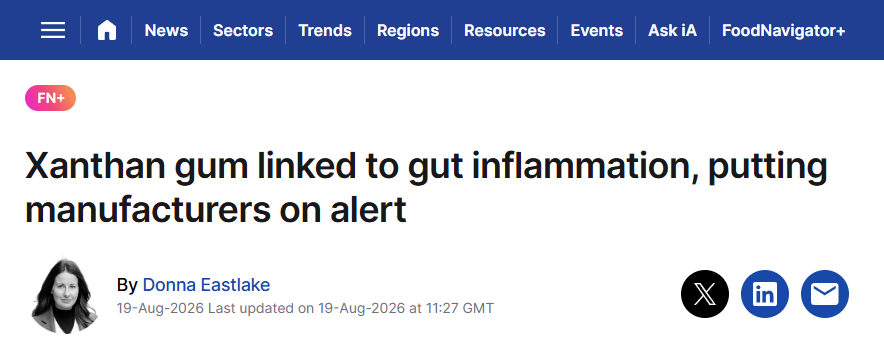
A recent study conducted by scientists at the Federal University of São Paulo (UNIFESP) and published on Food Navigator investigated the effects of long-term xanthan gum consumption. In rats, researchers observed colon inflammation, changes in gut microbiota composition and reduced intestinal barrier integrity. The inflammatory response was strongest in groups receiving medium and high doses of xanthan gum.
It must be noted though that, as these these findings were observed in rats, further studies are needed to understand any implications for humans.
However, this is yet another example of how ingredient scrutiny continues to intensify, particularly around ingredients commonly associated with ultra-processed foods. As the study’s authors noted, the concern is less about occasional consumption and more about long-term, cumulative exposure.
The Bigger Story Is Consumer Trust
The reason I’m writing this blog post isn’t just because of the science and these latest findings… What I’m concerned with is how consumers are likely to respond.
We’ve been talking for years about the shift towards cleaner labels, shorter ingredient decks and ingredients consumers actually recognise. The latest research simply adds fuel to a trend that was already well underway.
According to FMCG Gurus’ Clean Label & Naturalness Report (June 2025), just 9% of consumers across the UK and Europe recognise xanthan gum. Meanwhile, FMCG Gurus’ Ultra Processed Food Report (July 2025) found that 31% of consumers said they are unaccepting of products containing xanthan gum.
When you combine low awareness with rising concern around food additives, it’s easy to see why brands are starting to look for alternatives.
A Challenge We Started Working On Years Ago
From our perspective, though, this isn’t a new challenge.
Back in 2024, we ran a campaign (you can take a look here) exploring alternatives to xanthan gum because we could already see the clean label movement gaining momentum.
During formulation work, we discovered something really interesting: PromOat, our oat beta-glucan, could function as an effective replacement for xanthan gum in a wide range of applications while bringing a whole host of additional benefits to the table.
Unlike xanthan gum, PromOat is produced from wholegrain oats and extracted without the use of chemicals. It can be labelled as ‘oat beta-glucan’ or ‘oat fibre’, making it a much more consumer-friendly ingredient declaration for brands looking to strengthen their clean label credentials.
Why PromOat Is More Than Just A Replacement
But it goes beyond replacement… and this is where things get really exciting.
Most ingredient replacements solve one problem. PromOat helps solve several.
Thanks to its strong water-binding and viscosity-modifying properties, PromOat helps create smooth textures and creamy mouthfeel in products ranging from beverages and dairy alternatives to sauces and bakery items.
It can also improve moisture management, contribute to shelf life, replace some fat in formulations and support calorie reduction strategies.
In other words, manufacturers don’t necessarily have to compromise functionality when moving away from xanthan gum. They can actually potentially gain additional benefits!
The Ingredient That Sits Across Multiple Trend Spaces
One of the things we love about PromOat is that it doesn’t fit neatly into just one trend.
It ticks boxes across several of the biggest trends shaping product development right now.
Clean Label
Consumers increasingly want ingredients they recognise and trust. PromOat’s natural oat origin and clean label positioning align strongly with this demand.
Fibre Enrichment
Fibre has become one of the hottest nutrition discussions in food and beverage. PromOat can help manufacturers achieve “source of fibre” or “high fibre” claims while boosting overall nutritional value.
GLP-1 and Weight Management
The rise of GLP-1 medications has accelerated consumer interest in satiety, fullness and nutrient density. Oat beta-glucan supplies fibre that may help promote satiety, making it particularly relevant for brands targeting weight management occasions.
Heart Health
Perhaps one of PromOat’s biggest strengths is its established health positioning. The European Commission-approved health claim states that oat beta-glucan has been shown to lower or reduce blood cholesterol, with high cholesterol being a risk factor in the development of coronary heart disease.
What Happens Next?
Will the latest xanthan gum study trigger widespread reformulation tomorrow? Possibly not.
Even the researchers themselves highlight the need for further investigation before drawing conclusions about human health impacts.
But what it does reinforce is a much broader shift that’s been underway for years.
Consumer expectations are changing. Clean label isn’t slowing down. Scrutiny of unfamiliar ingredients continues to grow. Brands continue to look for ingredients that deliver functionality and a compelling nutrition story.
That’s why we believe the conversation isn’t really about xanthan gum at all. It’s about future-proofing formulations. It’s about finding ingredients that help brands deliver on texture, stability, nutrition and consumer trust all at the same time.
And that’s exactly why we were exploring oat beta-glucan solutions years before the headlines arrived.
The research may be new. The opportunity isn’t.
Get in touch with our team today to kickstart your reformulation journey!

Roni is Head of Marketing at Healy Group, focusing on strategies that connect evolving market trends with innovative ingredient solutions. Working closely with sales and technical teams, she helps to support our customers with understanding the market and meeting changing consumer demands.